More freedom for planning
A seven-axis anthropomorphic arrangement supports end-effector orientation, joint obstacle avoidance and redundancy resolution. Nominal arm mass is 4.3 kg with +/-0.1 mm repeatability.

Robotics
Project configuration
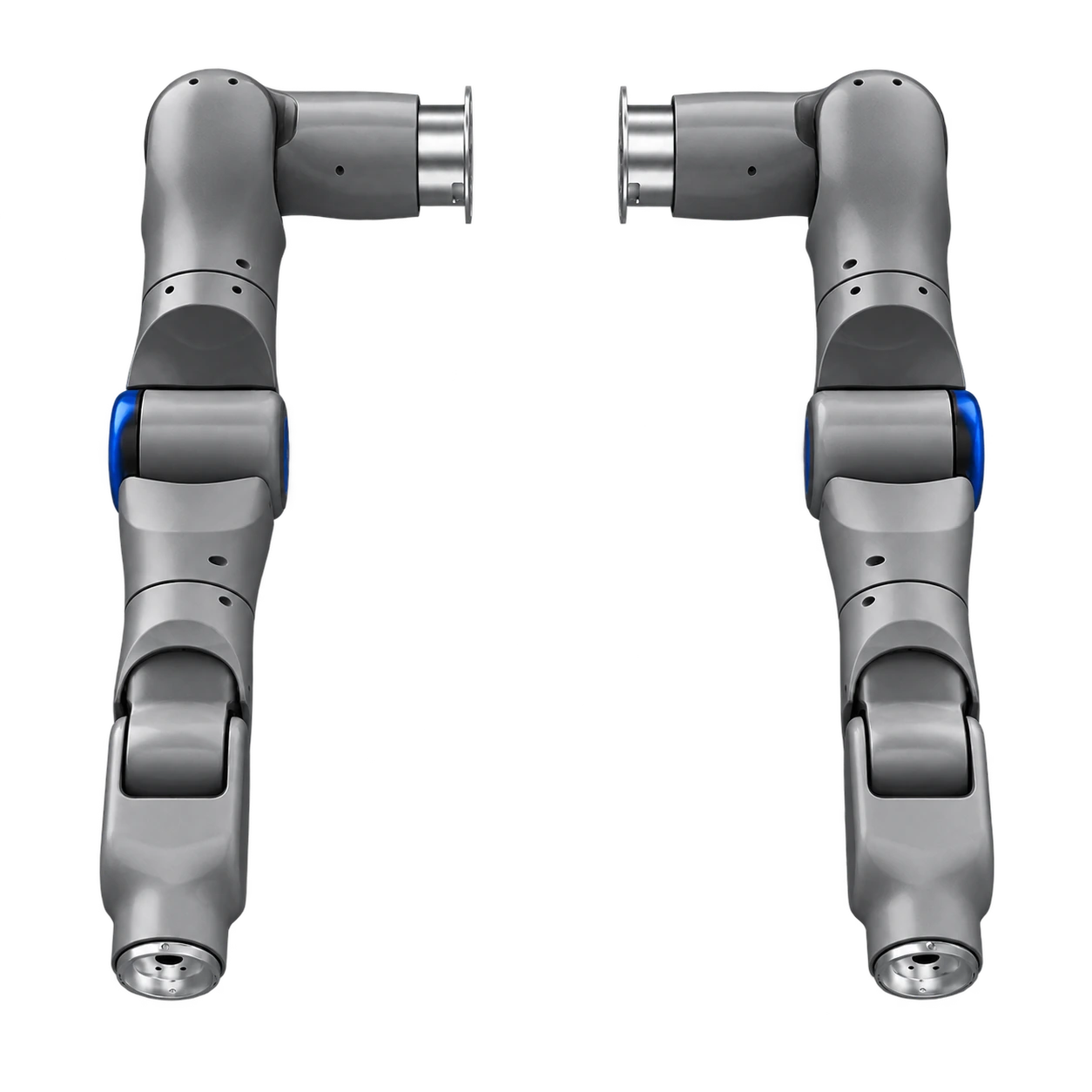
System overview
A seven-degree-of-freedom arm for fixed-workstation manipulation and robot learning. Kinematic redundancy, hand-guided teaching and combined force-position control support motion planning, impedance-control and imitation-learning research. Select a left arm, right arm or bimanual setup.
Configuration, lead time and delivery scope confirmed with your inquiry.
Design & capability
A seven-axis anthropomorphic arrangement supports end-effector orientation, joint obstacle avoidance and redundancy resolution. Nominal arm mass is 4.3 kg with +/-0.1 mm repeatability.
The manual lists gravity compensation, zero-force teaching and trajectory replay at a 100 Hz teaching sample rate. Joint torque-related readings are not direct end-effector contact forces.
Position, velocity, torque and MIT hybrid control are documented, alongside Python / C++, ROS 2 Humble, MoveIt2, Gazebo and URDF. Confirm interface versions.
Configuration details and measurement conditions.
| Degrees of freedom | 7 |
|---|---|
| Single-arm mass | 4.3 kg |
| Maximum payload | 3 kg |
| Maximum reach | 739.45 mm |
| Repeatability | +/-0.1 mm |
| Materials | Aluminum-alloy frame, plastic enclosure |
| Mounting | Rigid, level fixed workstation; hole pattern per version drawing |
| Configurations | Left / right / bimanual |
Maximum payload depends on pose, tool mass, center of gravity and dynamics. Repeatability is not absolute positioning accuracy.
| Joint | Range | Maximum speed | Rated torque | Peak torque |
|---|---|---|---|---|
| J1 | -60 to +180 degrees | 180 deg/s | 15 Nm | 30 Nm |
| J2 | -180 to +15 degrees | 180 deg/s | 15 Nm | 30 Nm |
| J3 | +/-158 degrees | 180 deg/s | 15 Nm | 30 Nm |
| J4 | +/-110 degrees | 180 deg/s | 15 Nm | 30 Nm |
| J5 | +/-158 degrees | 180 deg/s | 3 Nm | 7 Nm |
| J6 | +/-90 degrees | 180 deg/s | 3 Nm | 7 Nm |
| J7 | +/-158 degrees | 180 deg/s | 3 Nm | 7 Nm |
Coordinates, zero positions and signs depend on arm side and driver version. Peak torque is not a continuous rating.
| System power | DC 48 V; supply rated for at least 6 A with operating margin |
|---|---|
| Combined power | <300 W |
| Communication | CAN 2.0, 1 Mbps; USB-to-CAN adapter |
| External ports | 1 power / 1 CAN |
| Joint encoders | 21-bit dual encoders |
| Control modes | Position / velocity / torque / MIT hybrid |
| Teaching | Gravity compensation, zero-force recording, trajectory replay |
| Teaching sample rate | 100 Hz |
| Recorded fields | Joint position, velocity and torque-related data; units and timestamps per SDK |
CAN bandwidth and teaching sample rate are not policy inference or end-to-end control frequency. Use the complete-system 48 V supply requirement.
| Recommended environment | Ubuntu 22.04 LTS |
|---|---|
| SDK | Python / C++, version-specific APIs and examples |
| Middleware / planning | ROS 2 Humble / MoveIt2 |
| Simulation | Gazebo, URDF and matching controller configuration |
| Compute | External workstation or cloud service; GPU, models and trained skills not included by default |
| Temperature / humidity | 5-50 C / 35-80% RH, no frost |
| Noise | <60 dB; source measurement conditions unspecified |
| Accessories | USB-to-CAN, cables, fasteners and tools per bill of materials |
| Confirm separately | Power adapter, gripper, tactile end effector, cameras, fixtures, compute and safety equipment |
Delivery and validation
Nominal manual specifications, not Actrium measurements. Atlas A7 is a project product name. Force control alone does not establish safe shared human-robot operation. Validate the complete installation and agreed tasks.
Training and deployment
Plan GPU compute, model training and hosted inference, with control kept on the robot.
Training & Compute →
Robotics / Project configuration
Six-axis research manipulator
Robotics / Project configuration
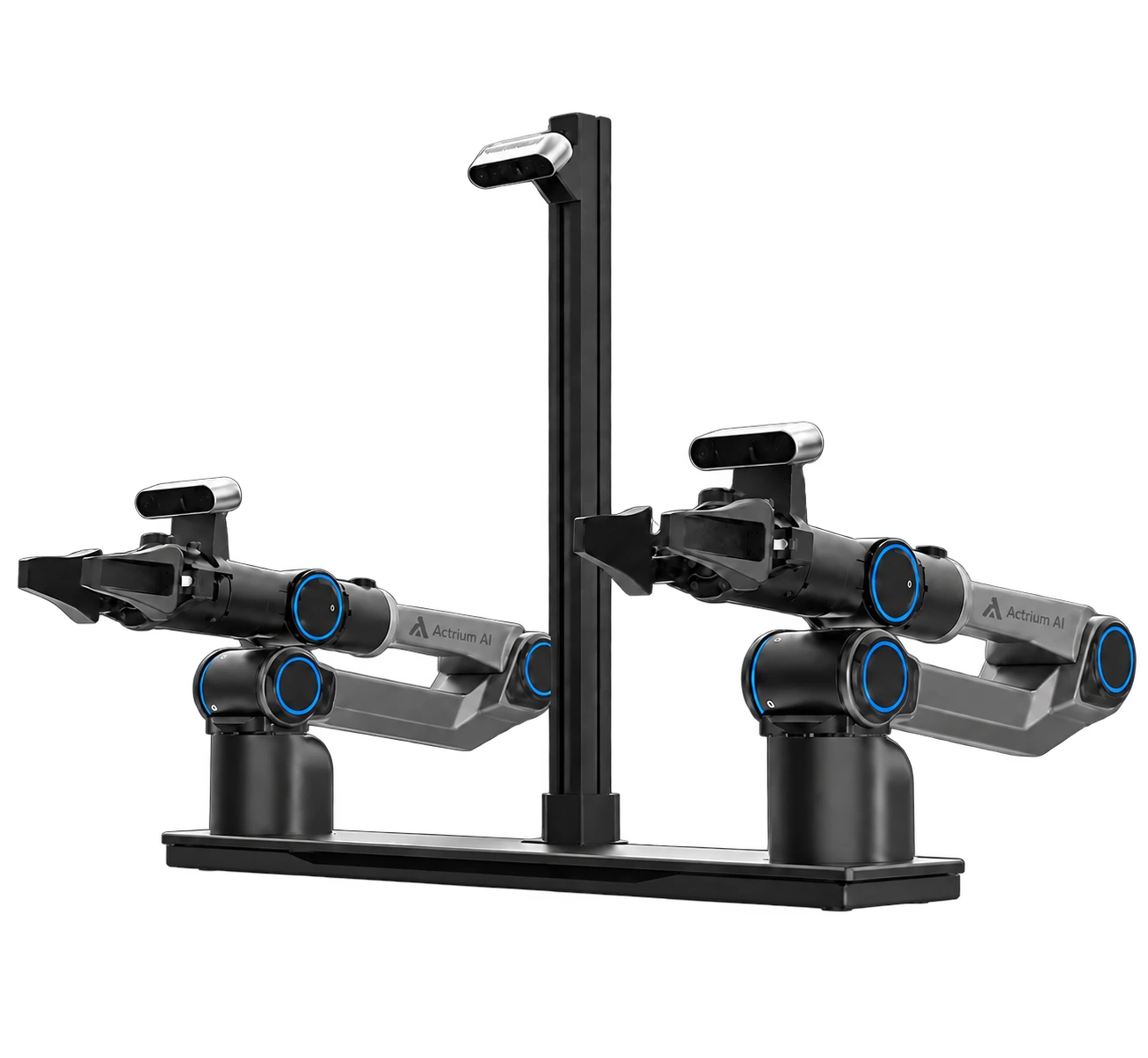
Desktop bimanual learning platform
Capture / Specification-based configuration
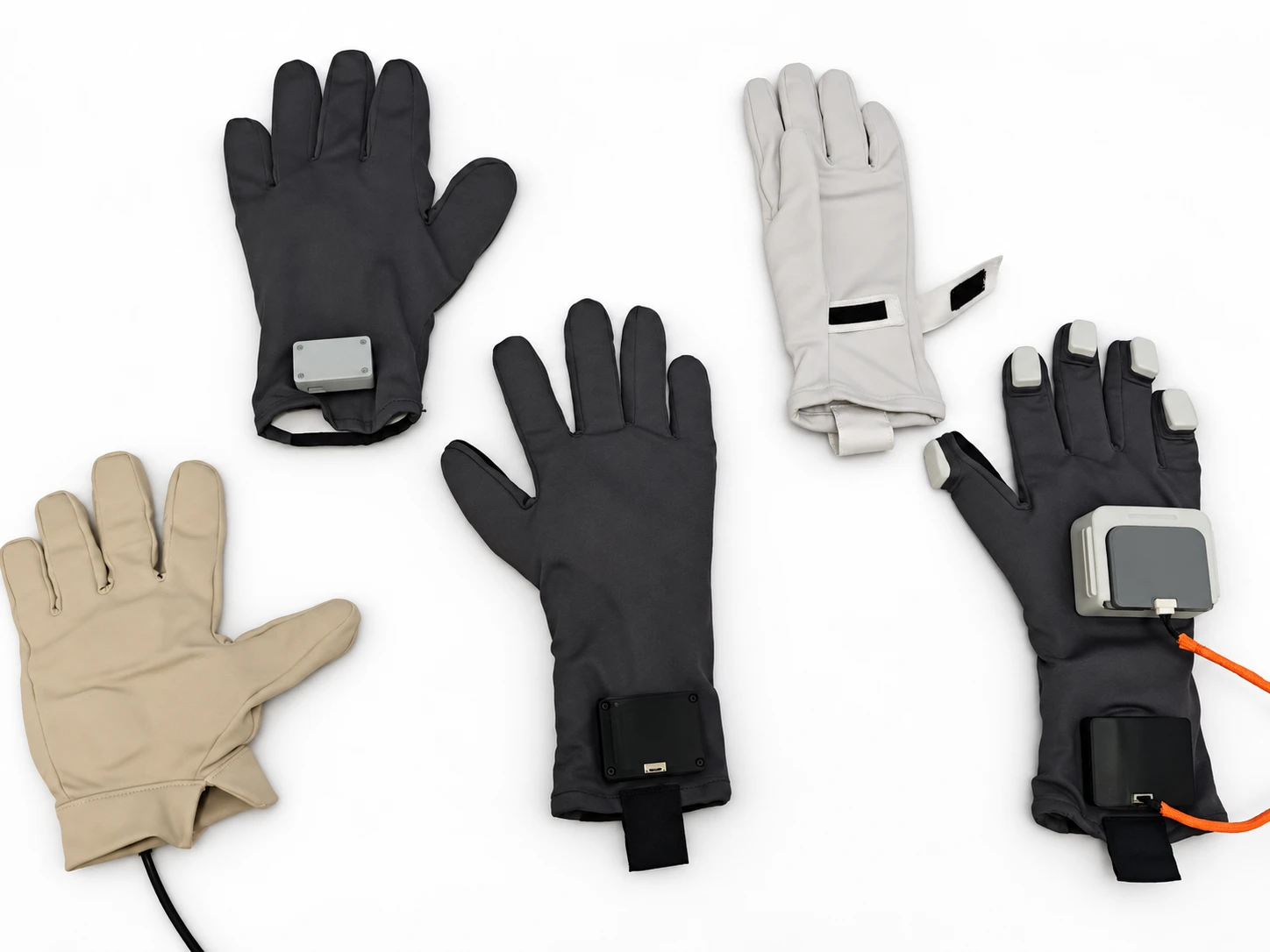
Contact sensing and electromagnetic tracking
Build with Actrium
Define the devices, data and evaluation your project needs.