Capture contact distribution
Fabric piezoresistive arrays cover the main palm-side contact areas. Record raw ADC values and point mappings; force or pressure conversion requires separate calibration.

Capture
Specification-based configuration
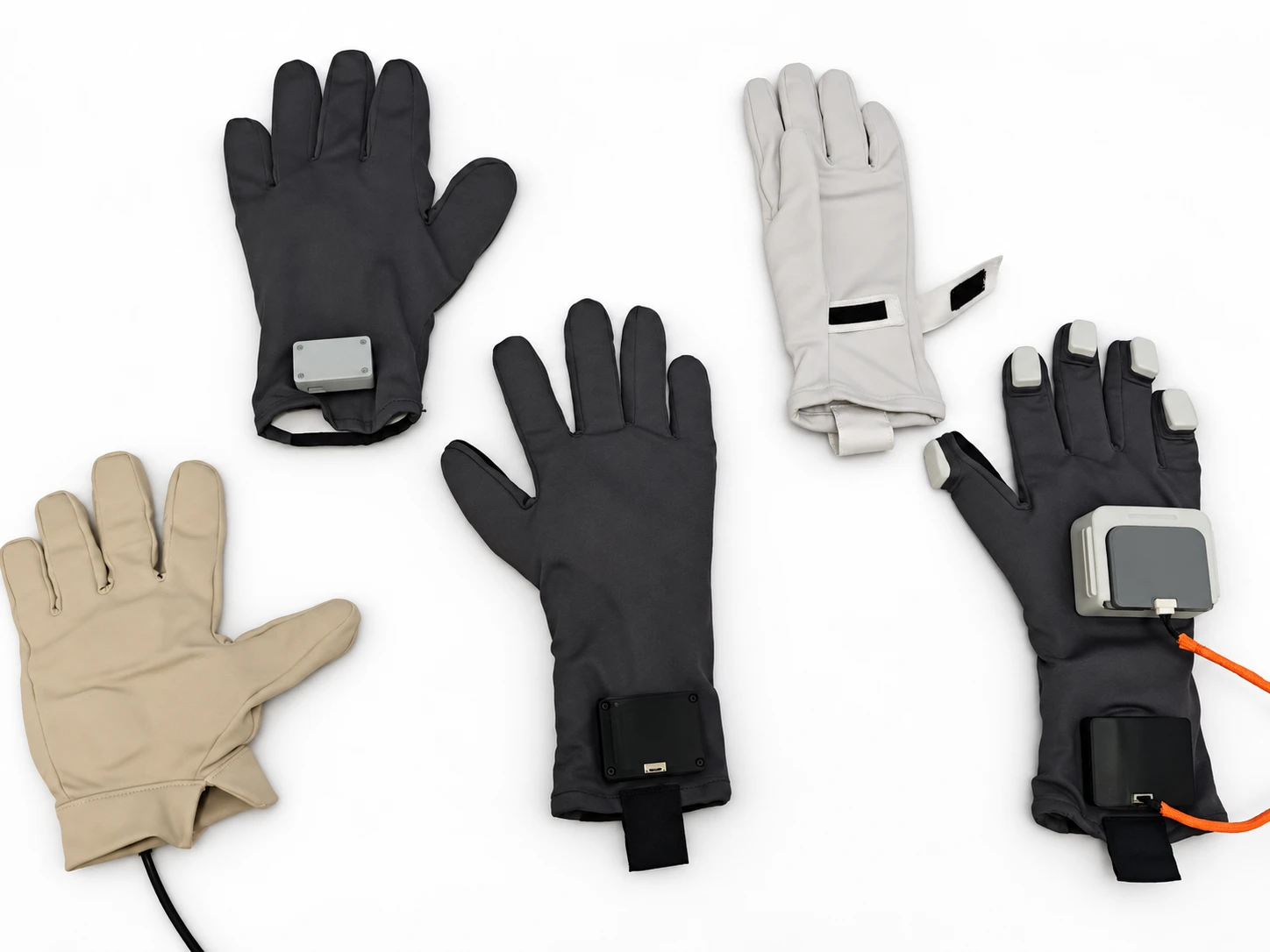
System overview
Record where contact occurs as well as how the hand moves. Palm-side tactile arrays and fingertip electromagnetic pose tracking provide inputs for dexterous manipulation, teleoperation and vision-tactile research.
Configuration, lead time and delivery scope confirmed with your inquiry.
Design & capability
Fabric piezoresistive arrays cover the main palm-side contact areas. Record raw ADC values and point mappings; force or pressure conversion requires separate calibration.
Five electromagnetic sensors track fingertip 6DoF poses. A 25DoF hand reconstruction is an algorithm output, not 25 independently measured joints.
USB and licensed SDKs provide access; wireless is optional. Validate coordinates, timing and robot end-effector mapping for each integration.
Configuration details and measurement conditions.
| Tactile points | 360 standard; 600 optional with layout confirmation |
|---|---|
| Sampling | 200 Hz standard; 400 Hz is a future upgrade direction, not a current delivery commitment |
| Connection / power | USB standard; optional wireless receiver and battery module |
| Package | 1 glove + 1 data cable; bilateral sets and tracking accessories specified separately |
| Tracking accessories | Confirm field generator / reference source, receiver, SDK licenses and cables |
| Customization | Appearance, outer material and protection by agreement |
| Technology | Flexible fabric piezoresistive sensing |
|---|---|
| Standard layout | 24 points per finger (16 fingertip + 8 middle), plus 240 palm points (16 x 15) |
| Coverage | Main palm-side regions except the four finger-base regions; confirm point map |
| Nominal density | 9 points/cm2 |
| Trigger / maximum range | 20 g / 1500 g as stated in source documentation; loading conditions and force calibration require confirmation |
| Output | Per-point ADC and total ADC; not directly N or Pa |
| Repeatability / consistency | Both +/-15% full scale |
Contact area, stretch, fit, temperature and humidity affect readings. Preserve the baseline and recalibrate after re-wearing.
| Sensors | 5 electromagnetic sensors; 6DoF each |
|---|---|
| Output | 3-axis position and rotation per fingertip; nominal 180 Hz |
| Hand reconstruction | Algorithm-derived 25DoF pose |
| 0.2 mm figure | Source table calls this accuracy; prose calls it resolution below 0.2 mm. Definition and test volume must be confirmed |
| Nominal latency | 10 ms wired / 30 ms wireless; measurement endpoints and conditions require confirmation |
| Deployment | Confirm tracking volume, coordinates, field source and metal interference |
Different sampling rates do not establish hardware synchronization. Sensor latency is not robot end-to-end control latency.
| Optional battery | Nominal 1200 mAh; confirm selected module |
|---|---|
| Runtime / charging | Nominal 2.5 hours / 2 hours; conditions unspecified |
| Temperature / humidity | -15 to 60 C / 0-90% RH, nominal; not a waterproof rating |
| Reliability source claim | More than 500,000 cycles under a 10 kg impact test; fixture and conditions unconfirmed, not a glove payload rating |
| Care | Avoid liquids, sharp objects and cable strain; clean with a soft dry cloth |
| SDK | Licensed Windows / macOS / Linux SDK; scope by agreement, not an open-source claim |
| Integration | Frame protocol, point map, calibration version, hand identity, timestamps and clock mapping |
Delivery and validation
Based on specification V1.3 dated July 25, 2026. Figures are document claims, not Actrium measurements. Standard, optional, future and unresolved specifications are identified separately.
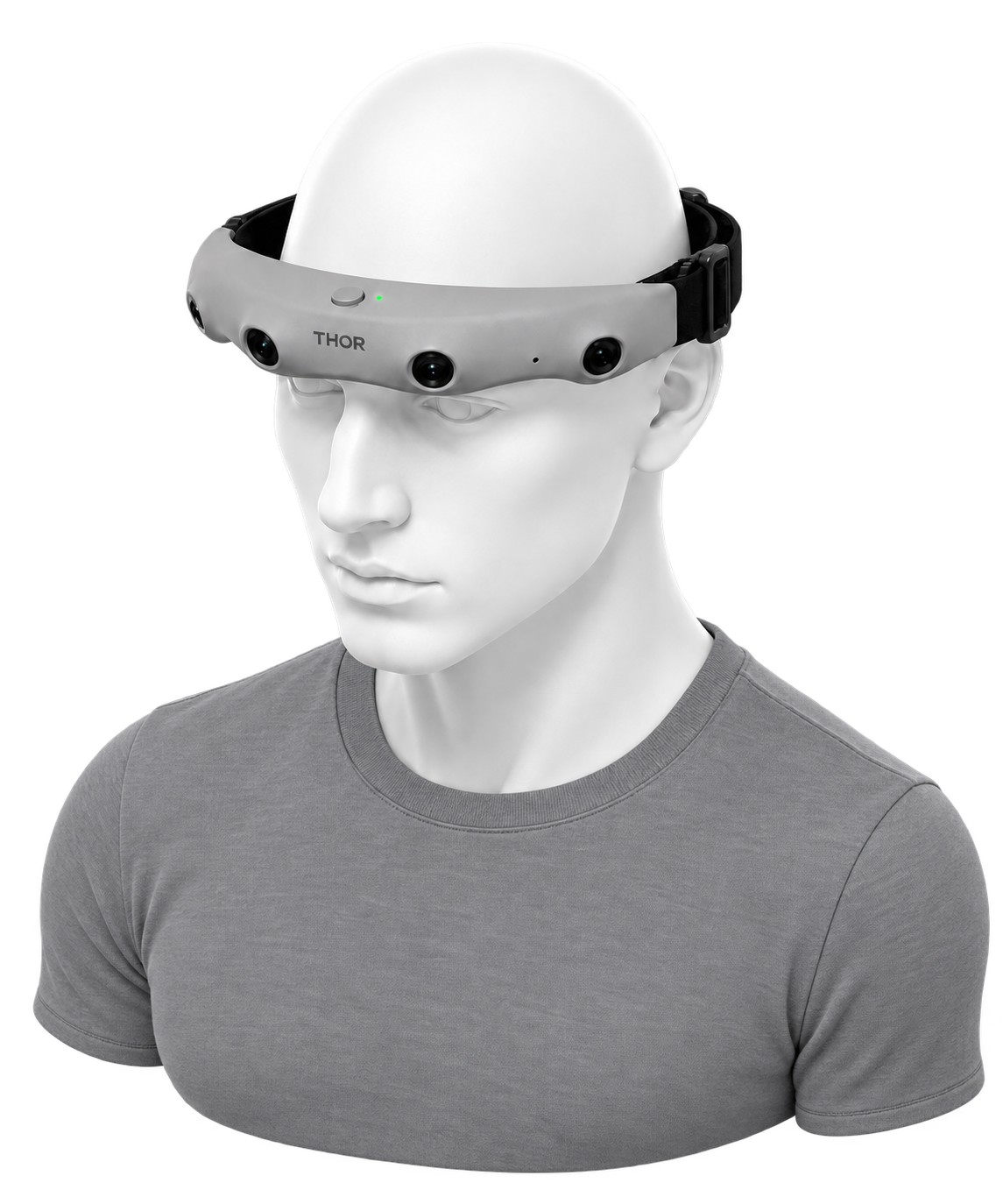
Capture / Specification-based configuration
Four-camera visual-inertial capture
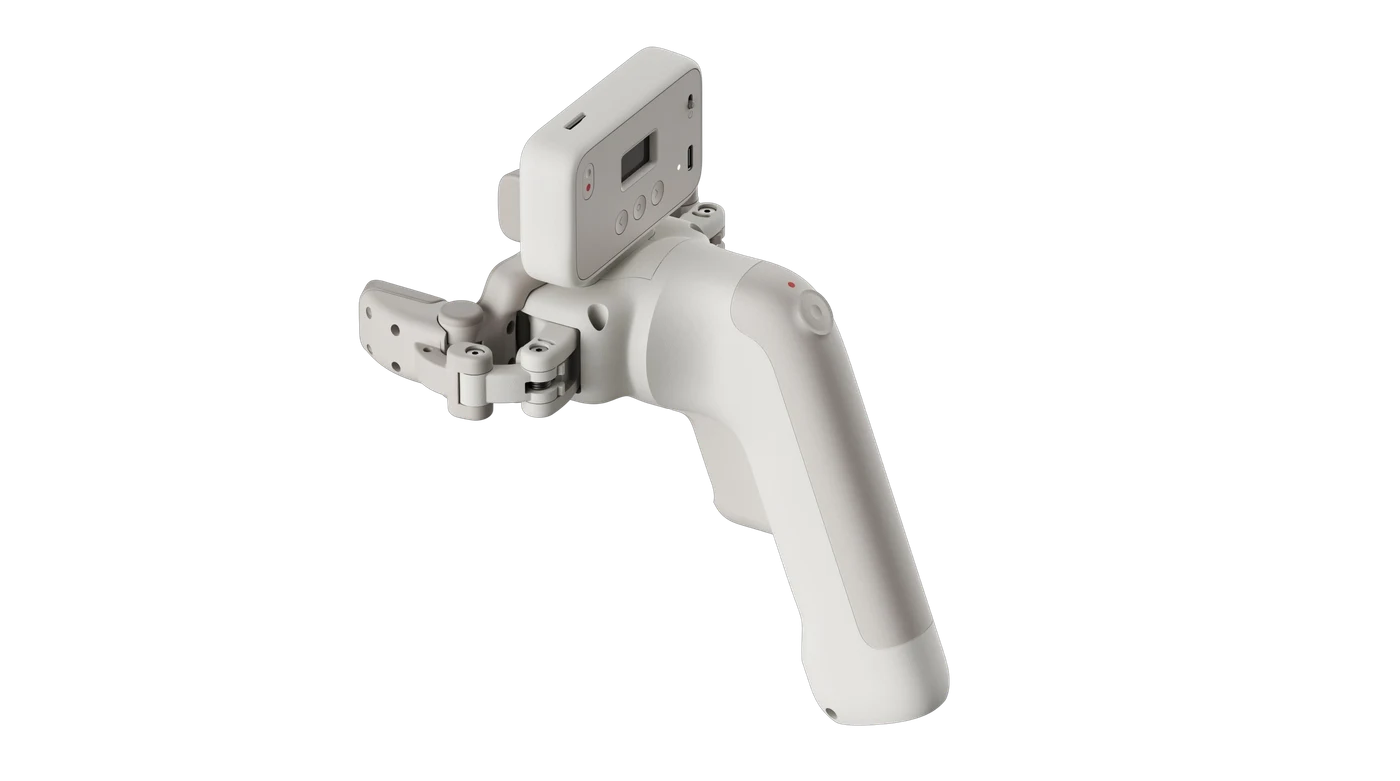
Capture / Specification-based configuration
Handheld manipulation demonstrations
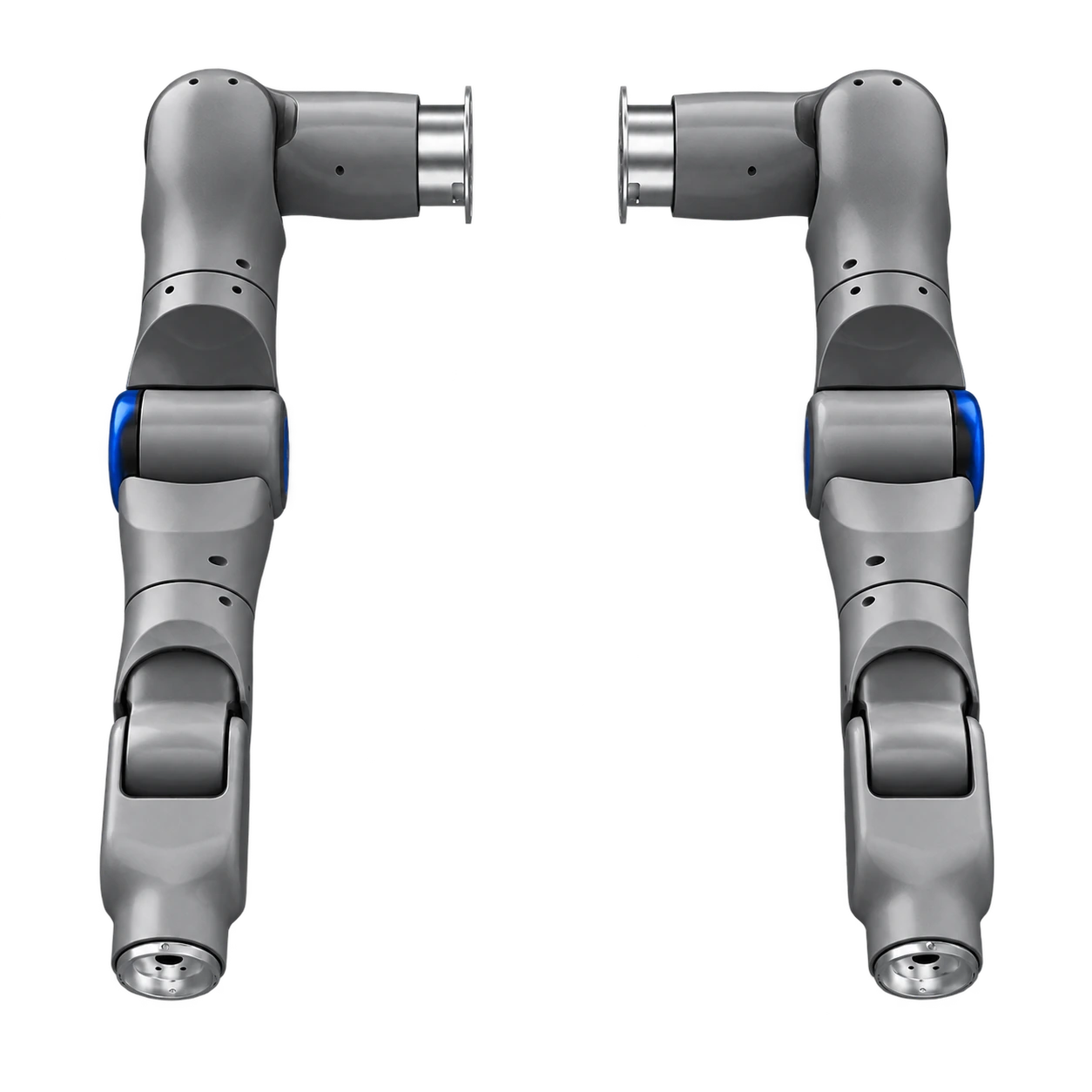
Robotics / Project configuration
Seven-axis lightweight research manipulator
Build with Actrium
Define the devices, data and evaluation your project needs.