Accessible structure
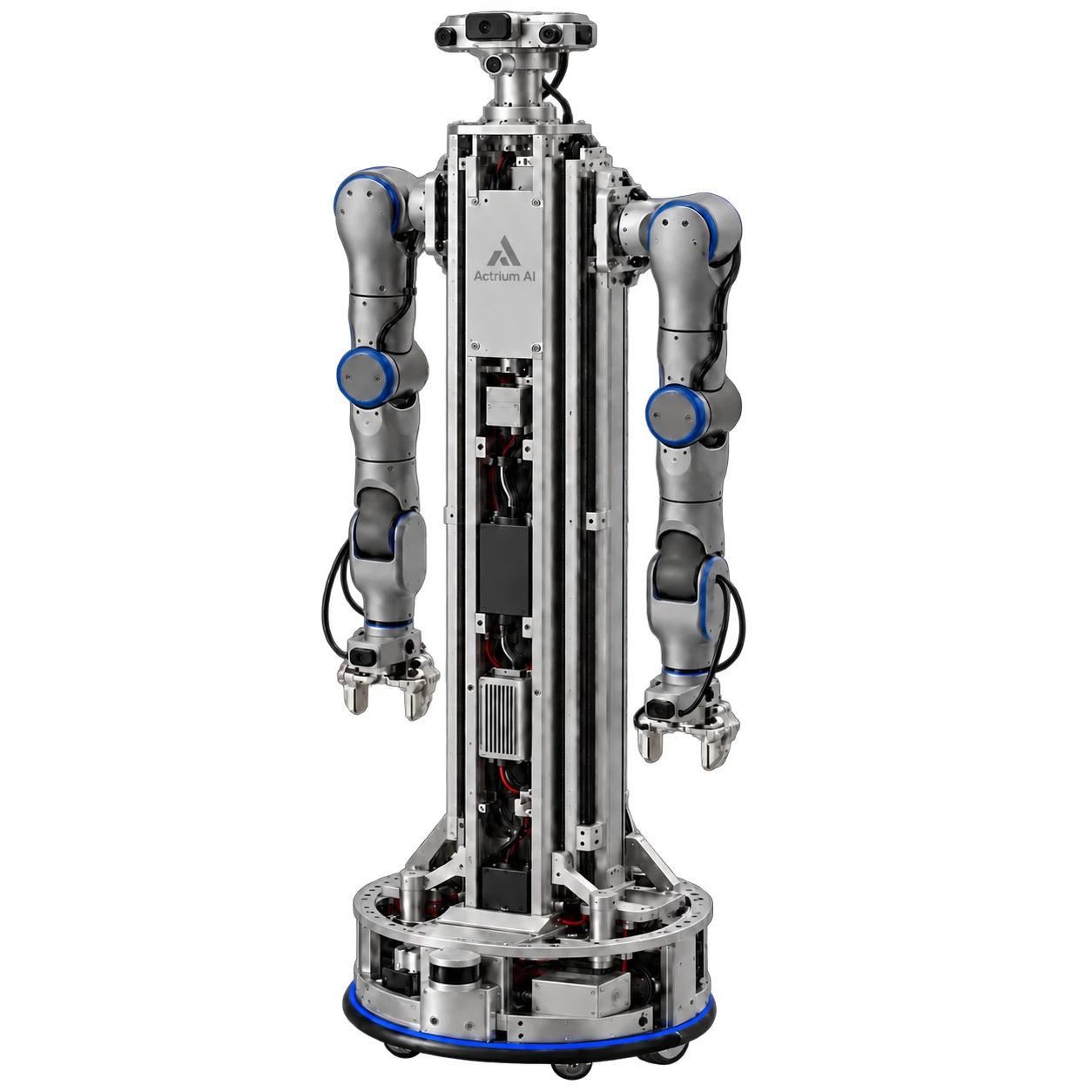
Reduced decorative enclosure exposes conceptual supports and cable paths. Internal frame and electronics are inferred, not verified teardown details.

Robotics
Research concept
System overview
An open-frame concept for mobile manipulation and bimanual learning. A circular wheeled base, vertical column and dual arms organize sensing, compute and actuation for integration, maintenance and research planning.
Configuration, lead time and delivery scope confirmed with your inquiry.
Explore in 3DAtlas R1 / In three dimensions
Loading 3D preview...
Conceptual exterior and layout only, not engineering CAD. Internal structures, materials and dimensions require project-specific confirmation.
Design & capability
Reduced decorative enclosure exposes conceptual supports and cable paths. Internal frame and electronics are inferred, not verified teardown details.
The base and vertical column organize side-mounted shoulder lift and arm placement. Travel, workspace and coordinated control require engineering validation.
Joint housings, driver insulation, cable retention, pinch protection and emergency-stop design remain part of the engineering scope.
Configuration details and measurement conditions.
| Version | Open-frame concept V02; not engineering-frozen |
|---|---|
| Retained layout | Circular base, vertical column, shoulder lift, dual arms and grippers |
| Inferred elements | Internal frame, guide transmission, electronics and cable routing |
| Arms / mobility | Joint count, payload, precision, travel, speed and workspace to be confirmed |
| Sensing | Planned head and optional wrist cameras; models and timing to be confirmed |
| Compute assessment | RTX 4070 / 4080 / 4090 / 5070 / 5080 / 5090 workstation options. Power, cooling, installation and software compatibility require engineering review; high-power GPUs may use an external workstation. |
| Safety | Emergency stop, limits, communication-loss stop, collision controls and moving-part protection require validation |
| Recording | Vision, joints, end effectors, base state and task events |
|---|---|
| Teleoperation | Selected demonstration devices and supervised takeover; interfaces and latency to be confirmed |
| Learning workflow | Planned cleaning, annotation, versioning and training export |
| External devices | Thor, UMI, tactile gloves and FMG + IMU pairing require validation |
| Software scope | SDK, protocols, ROS, URDF and simulation assets to be confirmed |
| Engineering freeze | Dimensions, mass, center of gravity, power, transport, battery, cooling, runtime and delivery scope remain open |
Open-frame describes the structure, not an open-source hardware or software license. Planned integration is not a currently available feature list.
Delivery and validation
Research concept based on reference imagery and AI structural inference. No physical teardown was performed. The image cannot support fabrication, kinematic or safety validation; unconfirmed specifications are not performance or delivery commitments.
Training and deployment
Plan GPU compute, model training and hosted inference, with control kept on the robot.
Training & Compute →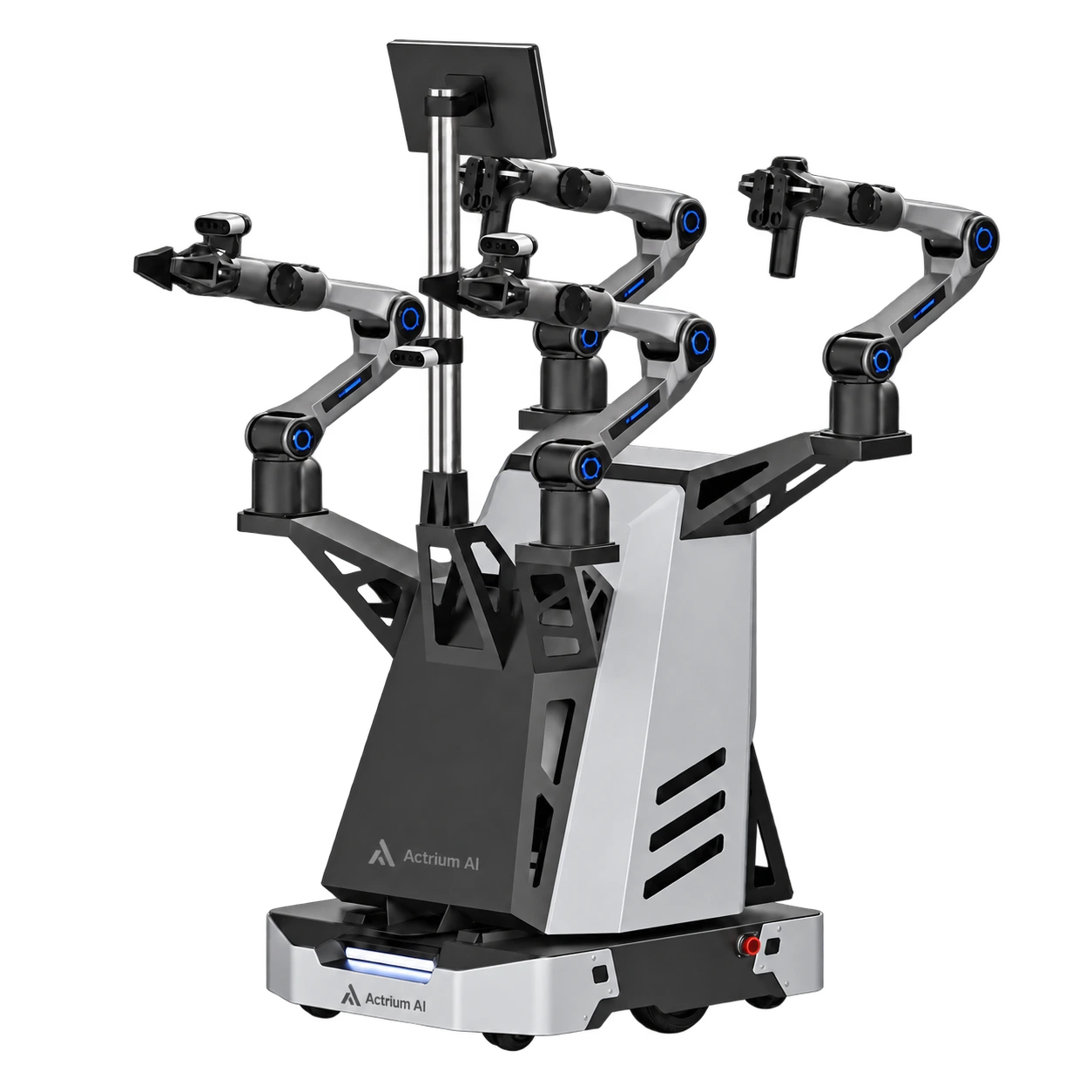
Robotics / Project configuration
Integrated mobile bimanual platform
Capture / Specification-based configuration
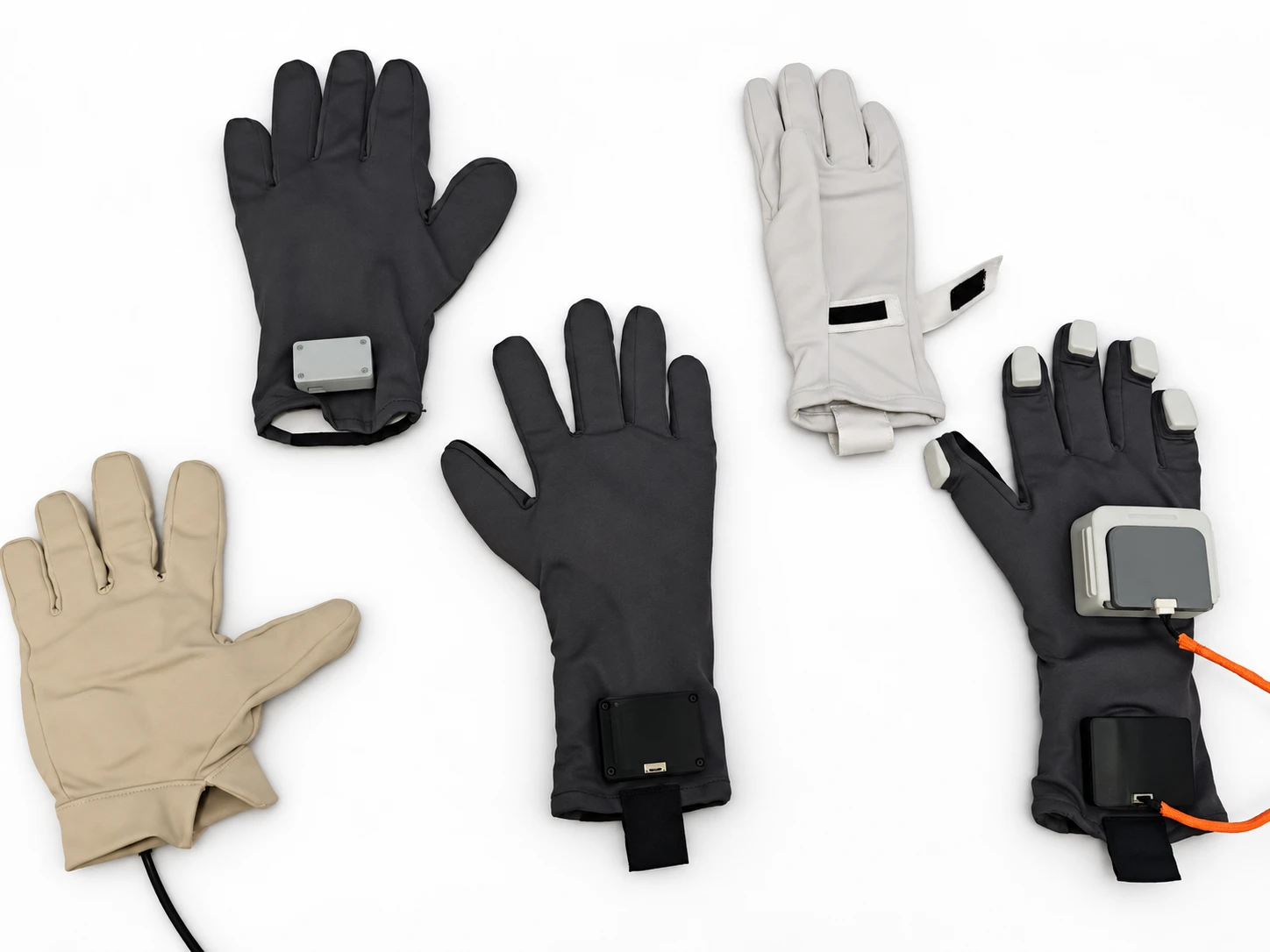
Contact sensing and electromagnetic tracking
Capture / Specification-based configuration
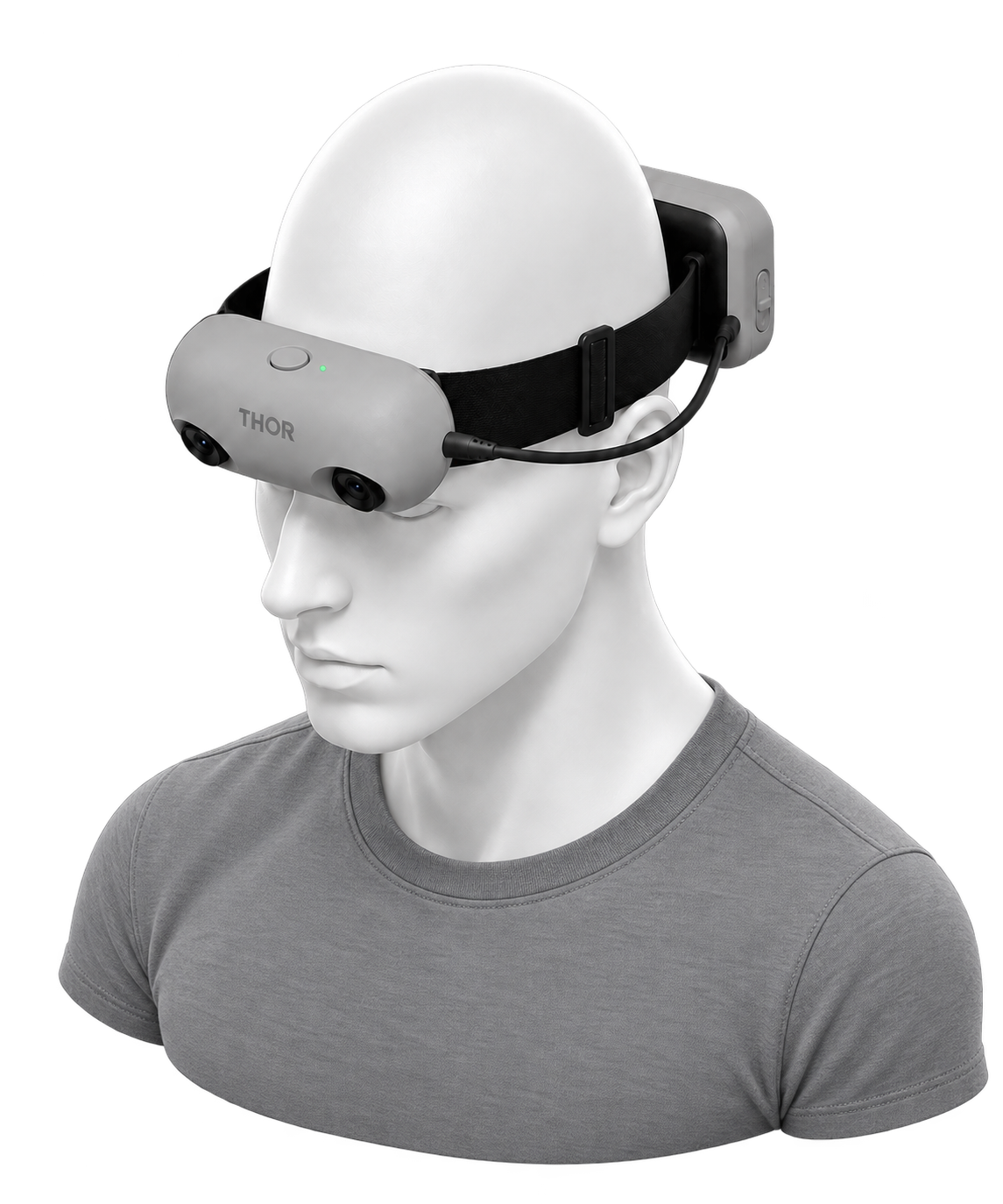
Dual-camera visual-inertial capture
Build with Actrium
Define the devices, data and evaluation your project needs.